
Strength Training During Menopause: Where to Start
Have you noticed your body doesn't quite respond the way it used to?
Your weight or body shape has changed. You're not feeling as strong. Your joints might feel a little stiffer. Your energy isn't always predictable and a bad night's sleep can make the thought of exercising sound like a nightmare.
I've worked with a load of women in their 40s and 50s who share similar experiences.
For some, exercise used to be relatively straightforward.
Then perimenopause or menopause arrives and suddenly they're questioning what they should be doing, if they should still be lifting weights and whether they’re doomed to have a midsection they just can’t get rid of.
The good news is that there is hope!
In fact, strength training during menopause can be one of the most useful things you can do for your muscle, bones and ability to stay strong and active in the years ahead.
And you don't need to train like a bodybuilder to benefit.
What Changes During Menopause?
Menopause isn't something that happens overnight.
Perimenopause can begin several years beforehand as hormone levels fluctuate, and symptoms vary enormously from one woman to another.
You might experience:
Changes in sleep
Hot flushes or night sweats
Changes in mood
Fatigue
Joint or muscle aches
Changes in body composition
Changes in where body fat is stored
Some women experience relatively few symptoms. For others, they can have a significant impact on everyday life and exercise.
One particularly important change is the decline in oestrogen associated with menopause.
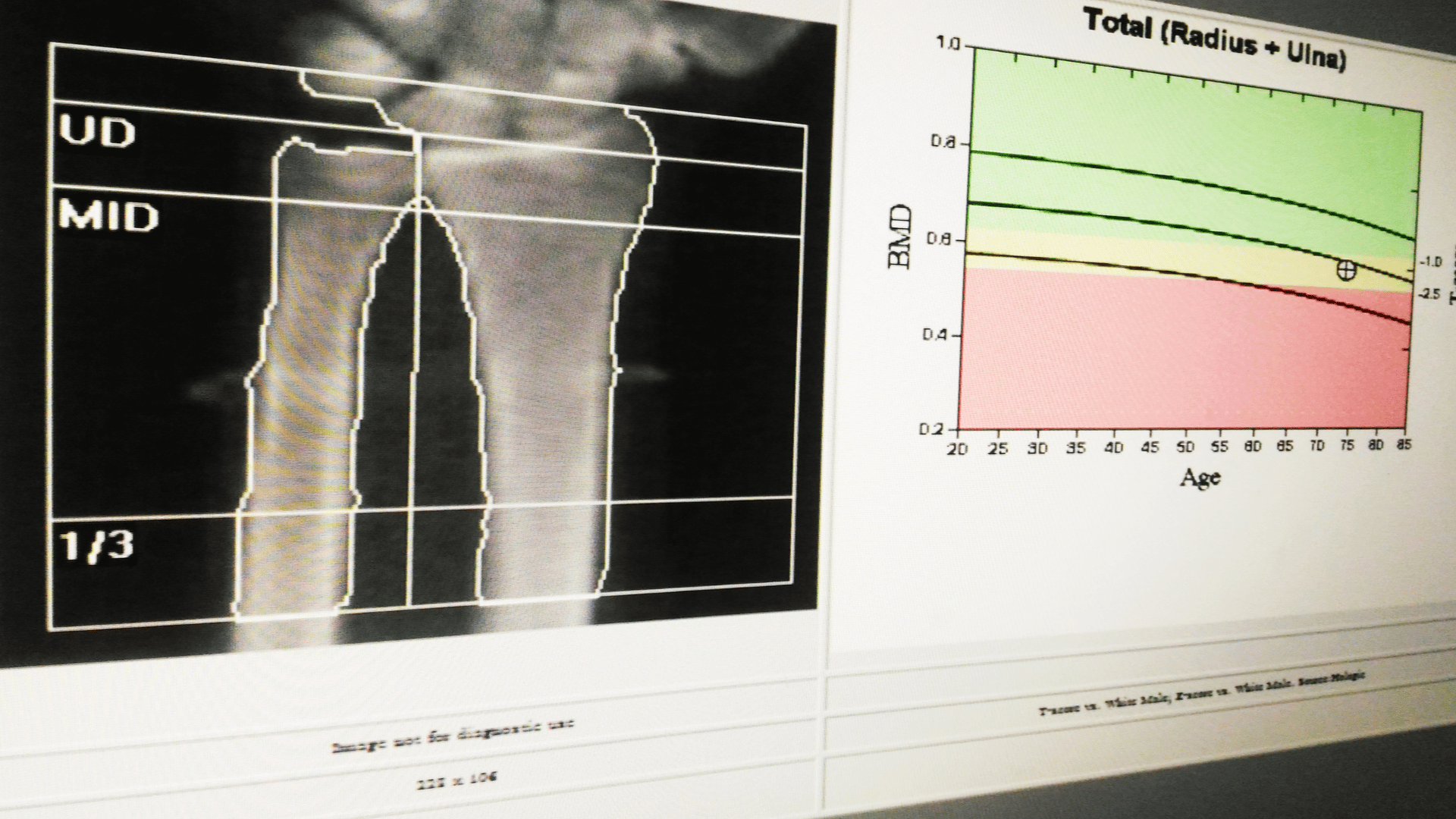
Oestrogen plays a role in maintaining bone health and declining levels are associated with increased bone loss. This is one reason looking after your muscles and bones becomes particularly important during and after menopause.
External link: NHS – Menopause and perimenopause

Why Is Strength Training During Menopause So Important?
For decades, women have been encouraged to exercise primarily to burn calories.
More cardio. More classes. Get sweaty. Burn as much as possible.
There's nothing wrong with cardio, but I'd encourage women over 40 to think about exercise from another perspective as well:
What can I do now that will help keep my body strong and capable in 10, 20 or 30 years?
That's where strength training really earns its place.
Resistance training can improve muscular strength and help maintain or build muscle. Research published in 2026 looking at more than 4,000 women found that both premenopausal and postmenopausal women improved their strength and body composition through resistance training. That is structured strength training, not cardio with weights.
So good news! Menopause doesn't remove your ability to get stronger.
Link to Study: Resistance training in women across the lifespan
Strength Training Helps Protect Your Bones
I know it isn't exciting but this is perhaps one of the most important reasons for women to consider strength training during menopause.
As oestrogen levels decline, bone density can decrease and the risk of osteoporosis increases.
Bones, however, respond to being challenged.
Resistance training creates force through your muscles and tendons and loads the skeleton, providing a stimulus that helps support bone strength.
The NHS specifically recommends resistance exercise to help protect against weakening bones.
That doesn't mean you need to start hitting the squat rack tomorrow, it means gradually introducing more resistance so your body is challenged and gets stronger as you progress.
Additional Resource: NHS – Osteoporosis prevention
Can You Still Build Muscle During Menopause?
Absolutely.
This is something I think more women need to hear.
You haven't missed your opportunity to become stronger because you're in your 40s, 50s or beyond.
A large 2026 review found that resistance training produced significant strength improvements in both pre- and postmenopausal women, with no significant difference in strength improvements between the two groups.
Encouragingly, your body is still capable of adapting to training.
The basic principle hasn't changed:
Challenge your muscles
Recover
Gradually increase the challenge
Get stronger.
The weights don't need to be huge.
They just need to become challenging enough for you. The problem I find is that most people never really push themselves, they get stuck their comfort zone and that is when progress stalls.
How Often Should Women Over 40 Strength Train?
You don't need to spend 5 days a week in the gym.
For someone starting out, 2 full-body strength sessions each week can be an excellent place to begin.
The NHS recommends muscle-strengthening activity on at least two days per week.
A simple session could include:
Squat: Goblet squat or leg press
Hinge: Romanian deadlift
Push: Chest press or dumbbell press
Pull: Seated row or lat pulldown
Carry: Farmer's carry
Core: Pallof press or another appropriate core exercise
You don't need 20 elaborate exercises you’ve found on Instagram.
You need a handful of movements performed consistently and gradually progressed.
What If You've Never Lifted Weights Before?
I've trained ladies in their 70's who have never set foot in a gym before. Believe me, time is still on your side.
One thing I see quite regularly is someone assuming they're "too weak" to start strength training.
But you don't get strong before you start strength training.
You strength train to become strong.
Exercises can be adjusted to your current ability.
A squat might initially mean standing up from a bench. Later it might become a bodyweight squat, then a goblet squat and eventually something considerably heavier.
The same principle can be applied throughout your program.
You don't need to prove anything on your first session, you just need somewhere sensible to start.
Remember: It's About More Than Weight Loss
Menopause is often discussed through the lens of weight gain.
And I understand why. Changes in body shape and weight can be frustrating, particularly when what worked previously doesn't seem to produce the same results.
But I'd encourage you not to judge the success of your training purely by what happens on the scales.
Think about what else you're building:
Stronger muscles
Stronger bones
Better physical capacity
Confidence lifting and moving
The ability to keep doing the activities you enjoy
Being able to hike, travel, carry your shopping, get yourself off the floor and remain physically independent later in life might not make for a dramatic 6 Week transformation photo.
But they're pretty important results
What to Do This Week
If you're currently doing little or no strength training, don't feel like you need to completely overhaul your life.
Start with 2 strength sessions this week.
Learn a few basic movement patterns.
Choose resistance that's manageable but challenging.
Then gradually progress from there.
You don't need a special "menopause workout".
You need a program appropriate for you, performed consistently enough for your body to adapt.
What to Do Next
If you're going through perimenopause or menopause and aren't sure how to start strength training, you don't have to figure everything out by yourself.
At Progress 165, I work with women over 40 who want to become stronger, improve their mobility and feel more confident about what their body is capable of.
We'll start with where you are now, take into account any aches, limitations or concerns you have and gradually build from there.
The goal isn't to train like a 25-year-old.
It's to build a stronger, more capable version of you for the years ahead.
Feel free to get in touch, even if its just for a chat:
📌 Holly Hill Leisure Centre, Barnes Ln, Sarisbury Green, Southampton SO31 7BJ
📞 07719 714297
✉️ [email protected]


