Improving Your Health and Longevity with Grip Strength Training
When people think about strength training, they often picture big muscular guys in the gym lugging heavy weights around, who are just there to improve the way they look. But one of the simplest measures of your overall strength and even your long-term health is something most people never think about: your grip strength.
Your grip affects almost everything you do. From carrying shopping bags and opening stubborn jars to lifting your grandchildren or hanging onto a handrail, strong hands make everyday life easier.
In fact, research has shown that grip strength isn't just about your hands. It's one of the strongest indicators of overall muscle strength, physical function and healthy ageing.
What Is Grip Strength?
Grip strength is the amount of force your hand can generate when holding onto an object.
Although it sounds simple, it relies on much more than just your fingers. Your grip is influenced by the muscles in your:
Hands
Forearms
Wrists
Shoulders
Upper back
Core
That's why improving your grip often means improving your whole body.

Why Grip Strength Matters
You probably use your grip hundreds of times every day without even noticing.
Think about how often you:
Carry shopping bags
Pick up children or grandchildren
Move furniture
Carry suitcases
Open jars
Walk the dog
Do DIY
Work in the garden
As we get older, you'll find that these simple tasks can become surprisingly difficult, not because we're getting old, but because we've stopped challenging our muscles.
One thing I've noticed after working with clients over the years is that people who struggle with grip strength often struggle with other movements too. Balance tends to be poorer, lifting feels harder and everyday tasks become more tiring than they should.
The good news is that grip strength improves quickly once you are aware of it in day to day life and if you start with regular strength training.
Article: https://www.nhs.uk/live-well/exercise/physical-activity-guidelines-for-adults-aged-19-to-64/
What Does the Research Say?
Grip strength has become one of the most widely studied measures of physical health.
Studies have found that people with stronger grips are generally more likely to:
Stay independent as they age
Have lower levels of frailty
Experience fewer falls
Maintain better overall muscle strength
Have better long-term health outcomes
That doesn't mean squeezing a hand gripper will make you live longer. Instead, grip strength acts as a simple snapshot of your overall physical capability.
In other words, stronger people tend to stay healthier for longer.
Link to Study: https://pmc.ncbi.nlm.nih.gov/articles/PMC10777545/

The Best Exercises to Improve Grip Strength
The great news is that you don't need specialist equipment.
Most people can build excellent grip strength through normal strength training.
Farmer's Carries
Pick up a pair of heavy dumbbells or kettlebells and simply walk.
This is one of the best exercises for improving grip while also strengthening your core, shoulders and posture.
Deadlifts
Every deadlift challenges your grip.
Whether you're using a barbell, kettlebells or a trap bar, your hands have to work hard just to hold onto the weight. It is a complex movement though, so get help if you're unsure.
Dead Hangs
Simply hanging from a pull-up bar is fantastic for improving grip endurance.
If you're new to exercise, even 10–20 seconds is a great starting point.
Reverse Grip Bicep Curls
Instead of your usual underhand grip, go for an over hand grip. This will help strengthen the wrists.
Heavy Rows
Rows force your grip to stay strong throughout every repetition, making them another fantastic all-round exercise.

Simple Ways to Improve Your Grip Outside the Gym
Not every improvement has to come from structured workouts.
You can naturally strengthen your grip by:
Carrying your shopping instead of using a trolley
Gardening
Carrying buckets or watering cans
Hanging from monkey bars with the kids
Using hand tools instead of power tools where practical
Everyday life can become training if you look for opportunities.
Common Mistakes
Many people focus on isolated forearm exercises while ignoring the bigger picture.
To build useful grip strength:
Prioritise free weights over machines.
Avoid relying on lifting straps for every exercise.
Progress your weights gradually.
Train your whole body, not just your forearms.
Remember, your grip is only as strong as the chain behind it.
Key Takeaways
Grip strength is about much more than a firm handshake.
It reflects your overall strength, your ability to stay independent and your capacity to cope with everyday life.
If your goal is to become stronger, healthier and more capable, so don't overlook your grip.
You don't need complicated equipment or endless forearm workouts. Simply following a well-designed strength training program that includes exercises like farmer's carries, deadlifts and pull-up varitations will naturally improve your grip while strengthening your whole body.
Your future self will thank you every time you carry the shopping in one trip.
Study: https://pmc.ncbi.nlm.nih.gov/articles/PMC10984362/
Frequently Asked Questions
Can grip strength improve after 40?
Absolutely. Muscles respond to training at almost any age. Consistent strength training can improve grip strength well into later life.
How often should I train grip strength?
Two or three full-body strength training sessions each week are enough for most people to see improvements.
Do I need a grip trainer?
Not necessarily. Compound exercises such as deadlifts, rows and farmer's carries usually provide all the grip training most people need.
How can I measure my grip strength?
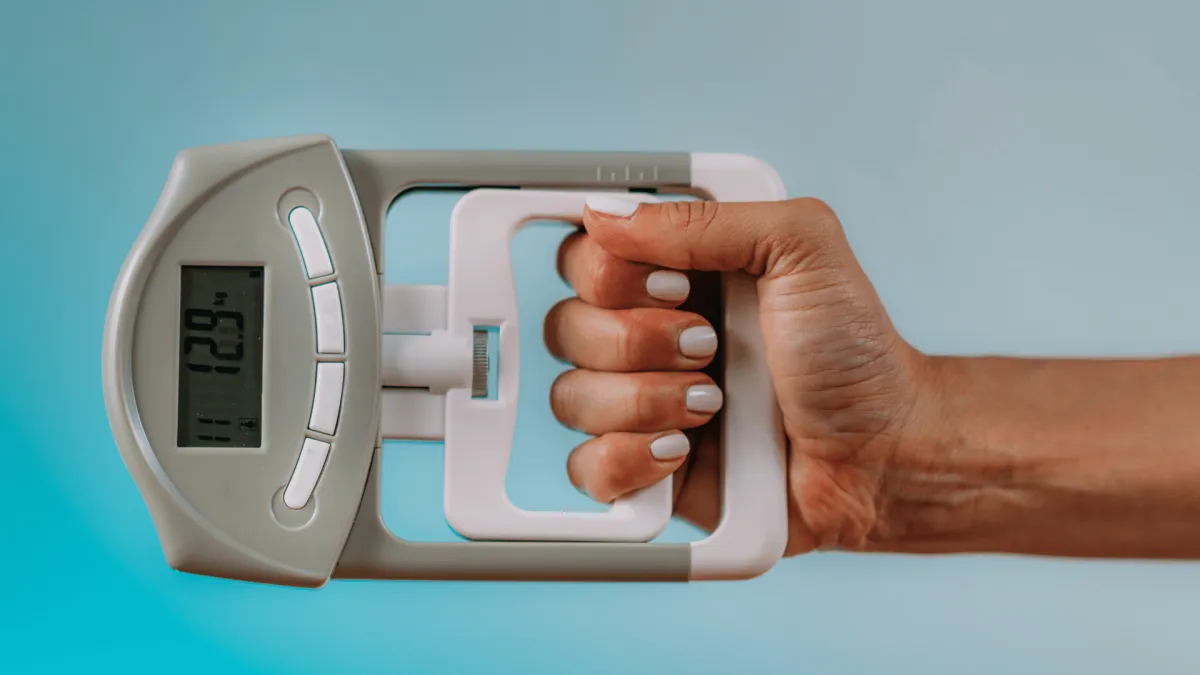
Many gyms, physiotherapists and health professionals use a hand dynamometer, which provides a quick and reliable measurement of your grip strength.
What to Do Next
If you want to stay strong, active and independent for years to come, strength training is one of the best investments you can make.
At Progress 165, I help men and women over 40 build real-world strength not just for the gym, but for everyday life.
Whether your goal is to lose weight, move without pain or simply feel stronger than you do today, I'd love to help.
Check out the options:
📌 Holly Hill Leisure Centre, Barnes Ln, Sarisbury Green, Southampton SO31 7BJ
📞 07719 714297
✉️ [email protected]
Book a consultation today and start building a stronger, more capable body.


